

Face Serum & Gel
A face serum is a highly concentrated skincare product that specifically delivers active ingredients to the skin. It supports and enhances the effects of moisturizer, providing intense hydration and tailored solutions for different skin needs.
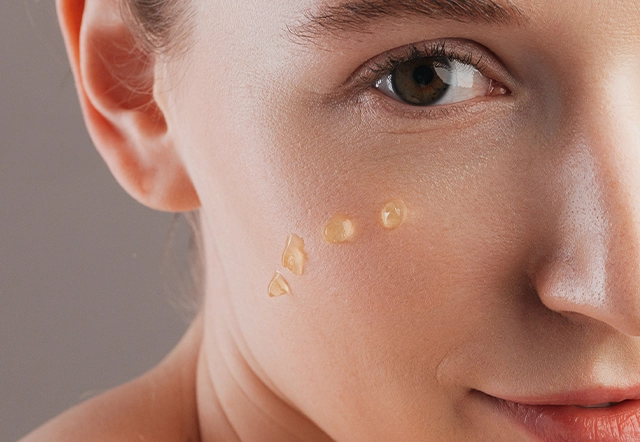

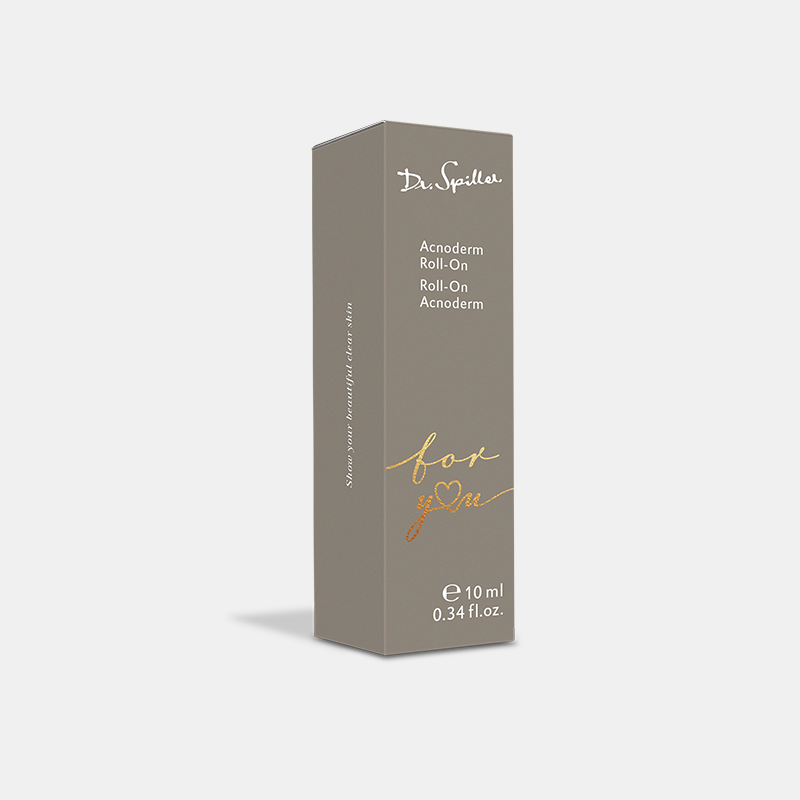


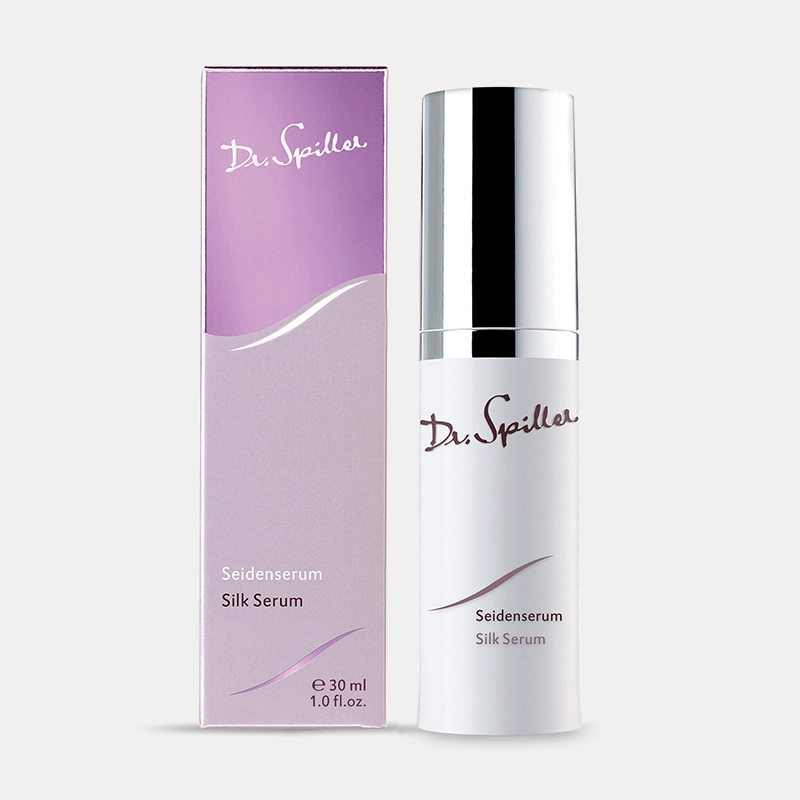
The Right Face Serum for Every Skin Type
A face serum or gel complements your daily skincare routine exactly where lipid-rich creams fall short. The serum’s lipid-free or low-lipid texture, combined with a high concentration of active ingredients, makes it an effective skincare booster within your routine. Depending on the specific formulation, it helps build moisture, has a balancing effect, or specifically addresses particular skin concerns such as the first signs of aging. As a personalized intensive treatment, it is carefully tailored to your skin type and condition.
Types of Face Serums & Alternatives
Moisturizing Serum
A moisturizing serum provides the skin with an intensive supply of moisturizing and hydration-retaining ingredients. It supports the skin’s long-term hydration and is suitable for all skin types, as adequate moisture is a key foundation of healthy skincare. A moisturizing serum can significantly improve the skin’s feel, especially in cases of dryness or tightness.
Soothing Gel
A gel has a slightly thicker, more viscous texture than a serum but serves a similar skincare purpose. It has a particularly balancing and moisturizing effect and is well-suited for sensitive or irritated skin.
Anti-Aging Serum
Anti-aging serums are tailored to the needs of mature skin or can be used preventatively to address the first signs of skin aging. The active ingredients they contain support the function of collagen and elastic fibers, thereby helping to improve the skin’s elasticity. With regular use, the skin’s appearance can become smoother and firmer.
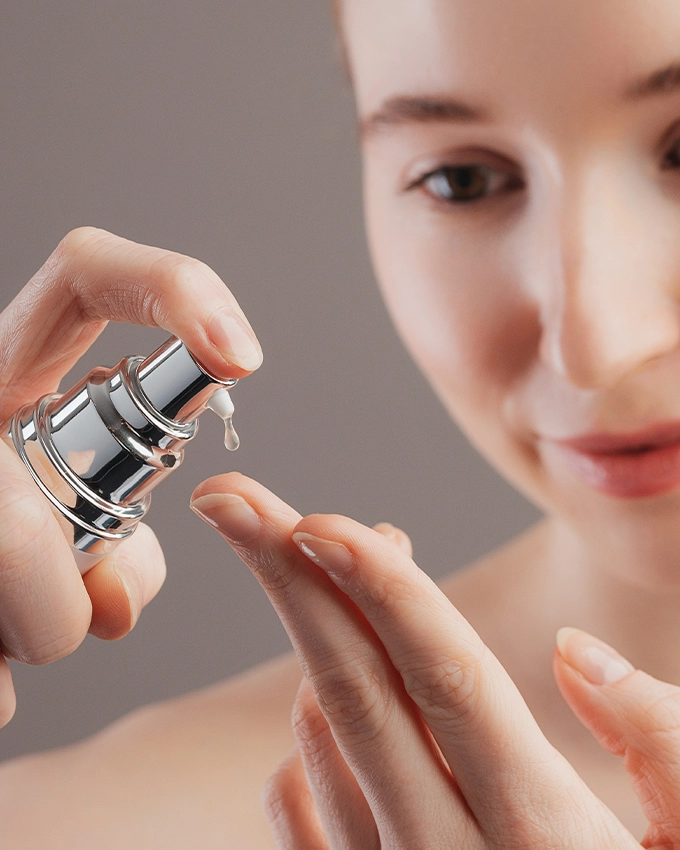
Incorporating Face Serum into Your Skincare Routine
Proper application is crucial for the face serum to work effectively. When incorporated into your daily skincare routine, it complements your skincare regimen in a targeted and effective way.
- Thoroughly cleanse the face: Thorough body creams is the foundation of any skincare routine. The facial serum can only be optimally absorbed by clean skin.
- Apply facial toner: A facial toner refreshes the skin after cleansing and enhances its ability to absorb subsequent skincare products.
- Apply facial serum: Spread evenly over the face, neck, and décolletage, and gently massage into the skin.
- Apply moisturizer: A moisturizer seals in the serum, supports the skin barrier, and leaves the skin feeling nourished.
Effective Ingredients in Facial Serums
Using a facial serum provides the skin with targeted care through selected active ingredients. Not all ingredients are used in every formulation at the same time – rather, the selection is always based on the product’s specific skincare goal. This results in serums that are precisely tailored to different skin needs.
› Du möchtest noch mehr wissen?
- Hyaluronic acid is a proven moisturizer that attracts water and locks it into the skin. This can make the skin appear plumper and smoother. Hyaluronic acid is a key active ingredient in moisturizing serums and is also widely used in anti-aging formulations.
- Peptides are short chains of amino acids—in other words, small proteins – and act as “signaling molecules for the cells.” Depending on which peptides are included, they can, for example, signal skin cells to produce more collagen or elastin. Peptides are ideal for long-term anti-aging care, effectively influencing cellular activity.
- Retinol is one of the most effective anti-aging ingredients worldwide. It has been proven to support skin renewal and, when used regularly, can help make the skin appear finer and smoother. Due to its reliable effectiveness, retinol is preferred for demanding or mature skin, but be careful: It’s not the retinol concentration (%) in the product that matters most, but rather the formulation. Encapsulating the retinol helps stabilize the active ingredient and release it to the skin in a controlled manner, which greatly improves tolerability.
- Vitamin C is a powerful antioxidant that protects the skin from free radicals and promotes an even, radiant complexion. Vitamin C also supports the skin’s natural collagen production for improved elasticity. Vitamin C is often used in combination with vitamin E, as these two substances have a synergistic effect.
- Vitamin E has antioxidant properties and helps protect the skin from external environmental factors. When combined with vitamin C, it is a highly effective vitamin for protecting against free radicals.
- Vitamin B3 (niacinamide) is a versatile active ingredient that can help refine the skin’s texture. It supports the skin barrier, helps balance the skin’s appearance, and is suitable for various skin types – from sensitive to oily.
- Coenzyme Q10 is a naturally occurring molecule found in nearly all cells of the human body. In modern skincare, Q10 is particularly valued for its powerful antioxidant effects. It protects skin cells from free radicals and helps prevent premature skin aging. In addition, Q10 plays a central role in the mitochondria, the “powerhouses” of our cells. There, it supports energy production via adenosine triphosphate, thereby promoting natural cellular activity. These processes enable the skin to utilize its regenerative mechanisms more effectively, which has a positive effect on skin structure.
Our expertise. Your benefit.
- Intensive hydration that penetrates deep into the skin
- High concentration of active ingredients
- Light, easily absorbed textures
- The perfect moisturizing base under your cream
FAQs
What is a facial serum?
A facial serum is a lightweight skincare formula with a high concentration of active ingredients that is specifically tailored to address certain skin concerns. It is applied after cleansing and before moisturizer.
What does a facial serum do?
A serum enhances the effects of your moisturizer. It delivers active ingredients to the deeper layers of the skin and visibly improves the skin’s appearance.
Do I need to use a cream after applying the serum?
Yes. A moisturizing cream should always be applied after the serum. It locks the serum into the skin, protects against moisture loss, and complements the skincare routine with lipid-rich, protective ingredients.
When should you use a serum?
A facial serum is incorporated into your daily skincare routine and can be applied in the morning and evening after cleansing. It spreads particularly well on slightly damp skin.