

Skin pH:
Function, influencing factors, and proper care
The skin’s pH is a crucial factor in the skin’s protection, regeneration, and the effectiveness of skincare products. A stable, slightly acidic pH strengthens the skin’s acid mantle, supports the skin barrier, and plays a key role in maintaining skin health. In this article, you’ll learn how pH is measured, what factors influence it, and how it can be protected and supported through proper skincare.
The Skin's Natural pH Level
What Is the pH Level of Healthy Skin?
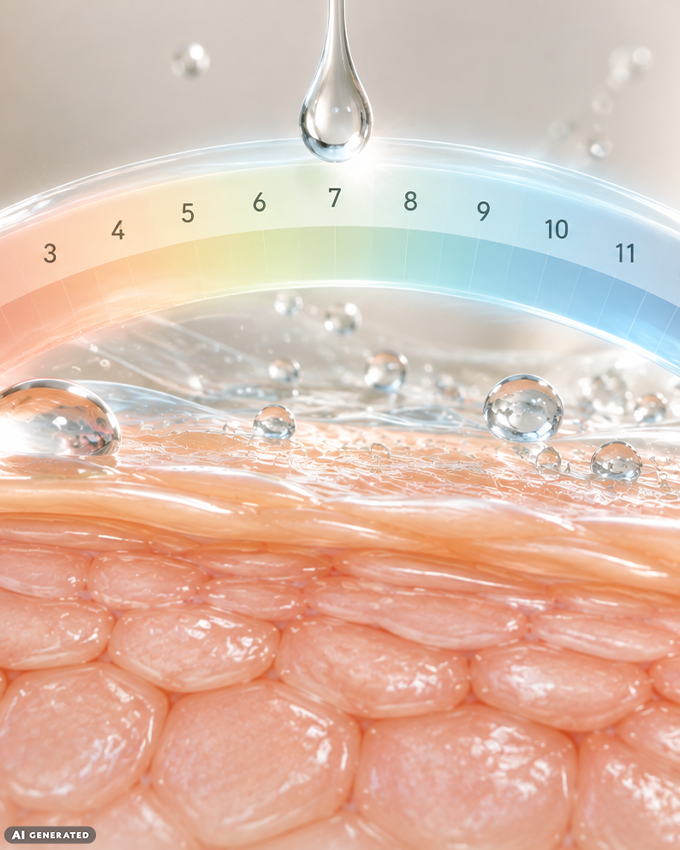
The pH level of healthy skin is usually in a slightly acidic range, between 4.8 and 5.5. This mild acidity forms what is known as the acid mantle, which protects the skin from pathogenic microorganisms, environmental stressors, and excessive moisture loss. A stable, slightly acidic environment ensures that the skin barrier remains intact and supports the skin’s overall health.
What determines the pH level of the skin’s surface?
The pH value results from the interaction of several components of the so-called acid mantle: skin lipids from sebum, sweat containing organic acids, and amino acids released (including those from the NMF, the Natural Moisturizing Factor), as well as metabolic products of the natural skin flora, all contribute to acid formation.& nbsp;
This slightly acidic environment stabilizes the skin barrier, inhibits potentially pathogenic microorganisms, and supports enzymatic processes in the stratum corneum. The combination of hydrophilic (sweat) and lipophilic (sebum) components results in the characteristic pH value, which is extremely important for healthy skin function.
What are the functions of pH?
- Protection against pathogens: A slightly acidic pH inhibits the growth of pathogenic microorganisms such as fungi and similar organisms.
- Maintaining the skin barrier: It stabilizes the skin’s acid mantle, which retains moisture and protects the skin from drying out.
- Supporting enzymatic processes: Enzymes responsible for skin renewal and the breakdown of dead cells function exceptionally well in a slightly acidic environment.
- Enhancing the effectiveness of skincare products: Active ingredients work best at a stable, slightly acidic pH level.
Why is a slightly acidic pH optimal?
A slightly acidic pH is optimal because it helps stabilize the skin’s acid mantle. It inhibits harmful bacteria and fungi, protects against moisture loss, supports enzymatic processes for skin renewal, and ensures that active ingredients in skincare products can work effectively. This keeps the skin barrier intact and maintains the skin’s long-term health.
How does the skin’s pH level change with age?
As we age, the skin’s pH level generally rises slightly. In older adults, it often ranges between 5.5 and 6.0. The skin therefore becomes less acidic due to changes in several physiological processes.
The main causes are:
- Reduced sebum production: As we age, the sebaceous glands produce less sebum. This also results in fewer free fatty acids, which contribute to the slightly acidic pH.
- Changes in sweat production: Older people often sweat less. Since sweat also contributes to the formation of the acid mantle, the pH level may rise.
- Slower skin renewal: The regeneration of the epidermis decreases. This also alters the processes that maintain the slightly acidic pH.
- Changes in barrier function: With age, the content of lipids and natural moisturizing factors in the stratum corneum decreases. This impairs the stability of the acid mantle.
- External factors: Frequent washing, alkaline cleansing products, UV radiation, and certain medical conditions or medications can further exacerbate the age-related increase in skin pH.
What are the consequences of an elevated pH level?
A higher pH level can:
- weaken the skin barrier,
- increase moisture loss,
- impair the activity of skin-protecting enzymes,
- promote the growth of pathogenic microorganisms, and
- make the skin more susceptible to dryness, irritation, and inflammation.
What role do enzymes play in relation to pH?
The skin’s enzymes function optimally only within a specific pH range. A slightly acidic environment, for example, ensures that so-called desquamation enzymes (exfoliating enzymes) can perform their function and regulate the shedding of dead skin cells. If, on the other hand, the pH level is too high or too low, this process is slowed down or even blocked. The skin may then exhibit increased dryness, irritation, or a weakened skin barrier.
What affects the skin's pH level and, consequently, its function?
An imbalanced pH level weakens the skin barrier, increases the risk of infection, and dries out the skin.
Internal (endogenous) & External (exogenous) Factors
The skin's pH is influenced by both internal and external processes:
| Endogenous | Exogenous |
|---|---|
| Age: As we age, the pH level rises slightly, and the skin barrier weakens. | Medications: Some creams or chemical substances alter the pH value locally. |
| Hormonal changes: Fluctuations (e.g., puberty, menopause, pregnancy) alter sebum and sweat production, which directly affect the skin’s pH level. | Skincare products: Alkaline soaps or harsh cleansers raise the pH level and weaken the skin barrier. |
| Genetic predisposition: Partially determines the skin’s condition, lipid composition, and acid mantle. | Environment: UV radiation, climatic conditions, air pollution, and pollutants disrupt the skin’s acid mantle. |
| Metabolism & Nutrition: An adequate supply of lipids, amino acids, and moisture supports the composition of the acid mantle. | Mechanical Factors: Friction, washing, or exfoliation can temporarily impair the acid mantle. |
Protect, Measure, and Regulate pH Levels
How do you protect the skin’s pH balance?
The skin’s pH balance is protected by maintaining the stability of its natural acidic environment and minimizing harmful influences. As part of your skincare routine, this includes, for example, using mild cleansing products instead of alkaline soaps, as well as moisturizing serums and creams that help maintain a healthy skin barrier.
Excessive washing, harsh exfoliants, or products with high alcohol content, on the other hand, should be avoided at all costs. Protection from the sun and pollution, as well as a healthy lifestyle that includes adequate hydration, a balanced diet, and effective stress management, also help maintain the skin’s acid balance and protect it from dryness, irritation, and potential infections.
How can you measure the pH level?
At Dr. Spiller, the state-of-the-art SKIN.ID skin analysis device is used to measure the skin’s pH level. It not only precisely measures the pH level, but also the skin’s moisture content, sebum content, elasticity, melanin content, and much more. Within just a few minutes, the device provides a comprehensive skin analysis, which professional estheticians can then use to develop treatment and product recommendations.
Alternatively, the pH level can be determined using the traditional and cost-effective method of pH indicator strips, which are available at drugstores or pharmacies.
What does the pH scale tell us?
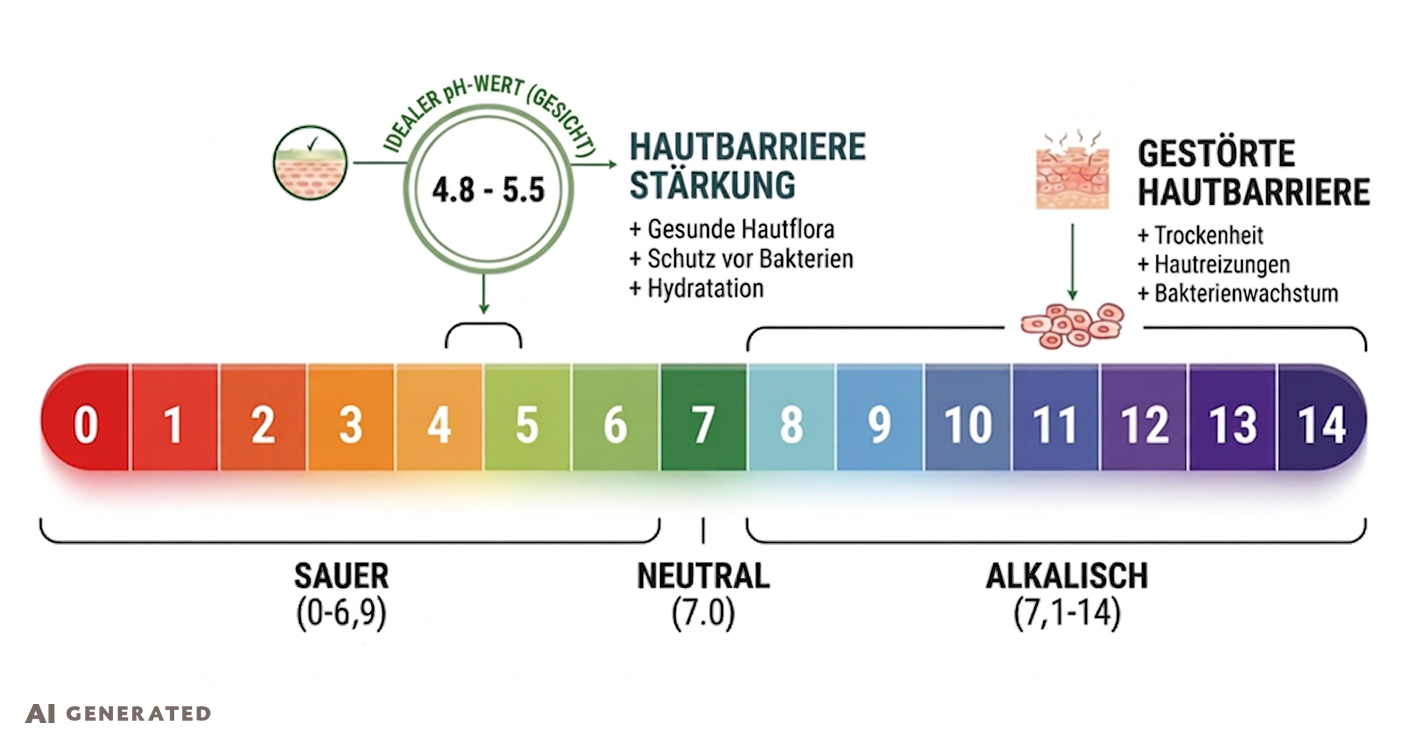
The pH value describes the acid-base balance of a solution and indicates how acidic or basic it is. The pH scale ranges from 0 to 14 and indicates how acidic or alkaline a substance is. A value of 7 is considered neutral; values below 7 are acidic, and values above 7 are alkaline. For the skin, the scale indicates how strong the acid mantle is: A slightly acidic value between 4.8 and 5.5 supports the skin barrier, inhibits harmful microorganisms, and makes a significant contribution to skin health.
How can you regulate and restore the pH level?
The skin's pH level can be stabilized and brought back into balance through targeted skincare products and habits. From a cosmetic perspective, it is important to use mild products that support and repair the skin's acid mantle and strengthen the skin barrier.
What is the pH level of skin care products?
The pH level of facial cleansers, toners, serums, face creams, and body care products
All facial cleansers, toners, and face creams from Dr. Spiller are specially formulated to support the skin’s pH balance. They support the skin barrier, protect the skin’s acid mantle, and promote a healthy microbiome. This keeps the skin protected, able to regenerate, and in its natural balance, while gently cleansing, nourishing, and moisturizing it.
Low-pH Serum
Products with a low pH specifically promote skin renewal and enhance the effects of acid peels or fruit acid serums. One example is AHA & PHA Ginkgosome Serum, which has a pH of 3. An acidic pH ensures that acids can fully unleash their exfoliating power and that skin renewal is stimulated more effectively. The product gently exfoliates, stimulates cell regeneration, and promotes an even complexion.
Why “pH-skin-neutral” Does Not Mean pH 5.5
In the context of cosmetic products, “pH-skin-neutral” means that their pH value corresponds approximately to the skin’s natural, healthy pH value (approx. 4.8–5.5) and therefore does not disrupt the skin’s acid mantle but rather supports it.
Different pH Levels in Skin Conditions
pH Levels of Dry Skin, Acne, and Rosacea (on the Face)
In skin conditions such as acne, rosacea, or atopic dermatitis, the skin’s pH level is often elevated and thus lies above the healthy, slightly acidic range. A pH level that is too high weakens the skin’s acid mantle and its natural barrier. This makes it easier for bacteria to grow, causes continuous moisture loss, and promotes inflammatory processes, inflammation, or irritation.
FAQs
What does a pH of 4.8–5.5 mean?
A pH value of 4.8 to 5.5 corresponds to the natural, slightly acidic environment of healthy skin. Within this range, the skin’s acid mantle functions optimally, the skin barrier remains stable, and the activity of important enzymes involved in regeneration and exfoliation is ensured. At the same time, this acidity slightly inhibits the growth of harmful microorganisms and supports a healthy skin microbiome.
Which is better for the skin, acidic or alkaline?
A slightly acidic pH level (4.8–5.5) is ideal: It protects the skin barrier, inhibits harmful bacteria, and supports regeneration; after all, “acid makes you happy.” Alkaline products can disrupt the skin’s protective acid mantle, dry out the skin, and promote irritation.
What happens to the skin when the pH level is too high?
If the skin’s pH level is above the optimal range of 4.8–5.5, the skin’s protective acid mantle is weakened. The skin loses moisture, becomes drier and more sensitive, and the activity of important enzymes involved in regeneration and exfoliation decreases. At the same time, harmful bacteria and fungi can multiply more easily, which can lead to irritation, inflammation, or skin conditions such as acne, rosacea, or atopic dermatitis.
What is the skin’s acid mantle?
The acid mantle is the slightly acidic outermost layer of the skin (pH 4.8–5.5), which consists of sweat, sebum, and metabolic byproducts of the skin’s microflora. It protects the skin from bacteria, fungi, and environmental factors, helps retain moisture in the skin, and supports skin cell regeneration. An intact acid mantle ensures healthy, resilient skin and a comfortable skin feel.
How long does it take for the skin’s pH level to return to normal after being disrupted?
Nach einer vorübergehenden Störung, z. B. durch alkalische Seifen oder starkes Waschen, kann sich der pH-Wert der Haut meist innerhalb von 30 Minuten bis wenigen Stunden wieder stabilisieren. Bei stark geschädigter oder empfindlicher Haut, wie bei trockener, atopischer Haut, Akne oder Rosacea, kann die Rückkehr zum normalen pH-Wert mehrere Tage oder sogar Wochen dauern. In solchen Fällen helfen milde Pflegen, Feuchtigkeitsspender und Barriereschutz-Produkte, um das Säuremilieu schneller wiederherzustellen.
What skincare mistakes negatively affect the pH level?
Alkaline soaps, harsh cleansers, or toners with high alcohol content raise the skin’s pH level. Excessive washing, hot showers, or over-exfoliation can also weaken the skin’s protective acid mantle. As a result, the skin loses moisture, becomes more sensitive, and the microbiome becomes unbalanced. A stable pH level can be restored with mild, pH-neutral skincare products.
References:
Angelova-Fischer I, Fischer TW, Abels C, Zillikens D (2018): Accelerated barrier recovery and enhancement of the barrier integrity and properties by topical application of a pH 4 vs. a pH 5·8 water-in-oil emulsion in aged skin. Br J. Derm. 179, 471-477. https://pubmed.ncbi.nlm.nih.gov/29577247/
Choi EH, (2018): Gender, Age, and Ethnicity as Factors That Can Influence Skin pH. Curr Probl Dermatol., 54:48-53. doi: 10.1159/000489517.
Costa FG, Horswill AR (2022): Overcoming pH defenses on the skin to establish infections. PLoS Pathog 18(5): e1010512. doi.org/10.1371/journal.ppat.1010512
Elias, P.M. (2015): Stratum corneum acidification: how and why?. Exp Dermatol, 24: 179-180. doi.org/10.1111/exd.12596
Fluhr JW, Menzel P, Schwarzer R, Kaestle B, Arens-Corell M, Praefke L, Tsankov NK, Nikolaeva DG, Misery L, Darlenski R, (2022): Acidic Skin Care Promotes Cutaneous Microbiome Recovery and Skin Physiology in an Acute Stratum Corneum Stress Model. Skin Pharmacol Physiol. doi: 10.1159/000526228
Hariry, H (2008): Untersuchung zum postpartalen Verlauf des Hautoberflächen-pH-Wertes von Säuglingen atopischer und nicht atopischer Familien zur Beurteilung des pH-Wertes als Prädiktor und pathogenetischen Faktors bei der atopischen Dermatitis (Dissertation Humanwissenschaften). Universität Osnabrück, Gütersloh. osnadocs.ub.uni-osnabrueck.de/handle/urn:nbn:de:gbv:700-2009060125
Hawkins S, Dasgupta BR, Ananthapadmanabhan, KP, (2021): Role of pH in skin cleansing. Int. J. Cosmet. Sci. 43, 474–483). doi.org/10.1111/ics.12721
Proksch E, (2018): pH in nature, humans and skin. J Dermatol., 45(9):1044-1052. https://pubmed.ncbi.nlm.nih.gov/29863755/
This may also be interesting:
Skin microbiome
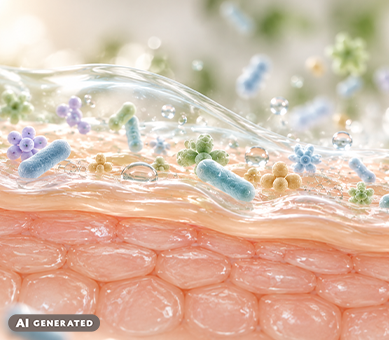
The skin microbiome is a living, sensitive microbial ecosystem that is as unique as each person’s fingerprint. It plays a key role in determining how healthy...
Skin barrier
A compromised or damaged skin barrier impairs the skin’s natural protective function and leads to dryness, irritation, and sensitivity...

Sensitive & hypersensitive skin
Sensitive or hypersensitive skin? Learn the difference – and what your skin really needs. Recognize typical symptoms, understand the causes...
Dr. Spiller Instagram
Follow us and become part of the Dr. Spiller Instagram community!